Pool fencing Turvey Park, Tolland and Mount Austin: where renting is common
Pool fencing in Turvey Park has a rental backdrop, as it does in Tolland and Mount Austin. In Mount Austin, 45.0 per cent of dwellings are rented, and in Tolland 43.4 per cent. Turvey Park is lower at 29.2 per cent rented, with a large owner share. So the lease certificate is a natural first question here: a landlord or agent needs paperwork before the tenancy starts, and a fence fault can hold it up. The figures come from the ABS 2021 QuickStats for Tolland, Mount Austin and Turvey Park.
| Suburb (2021) | People | Median age | Separate houses | Flats | Rented | Owned outright |
|---|---|---|---|---|---|---|
| Tolland | 3,459 | 34 | 83.5 per cent | 15.3 per cent | 43.4 per cent | 28.3 per cent |
| Mount Austin | 4,035 | 37 | 90.0 per cent | 3.0 per cent | 45.0 per cent | 23.4 per cent |
| Turvey Park | 3,572 | 35 | 93.6 per cent | 2.3 per cent | 29.2 per cent | 32.1 per cent |
Tolland's 15.3 per cent flats is the figure to keep in mind: the NSW sale and lease rules do not apply to strata or community lots in schemes of more than two lots, and the census does not say which flats are in such schemes. None of these figures counts pools, and we make no claim about how many there are or how old the fences are.
What a landlord or agent needs before a lease
The NSW Government owner page says that when a pool is rented, the landlord or real estate agent must provide the tenant with a copy of the certificate of compliance, and that a certificate of non-compliance cannot be used to rent. Another NSW council's page on leasing also mentions confirming registration on the Swimming Pool Register and giving the tenant a copy of the compliance or occupation certificate. The two pages are worded differently, so ask your agent which documents they need from you.
The Swimming Pools Regulation 2018 (version in force 30 June 2024) adds the timing. A certificate of compliance is valid for 3 years from issue, and a certificate of non-compliance for 1 year. It also says a certificate of non-compliance is not valid at any time the premises are under a residential tenancy agreement. A landlord with an old certificate should check its date before relisting. The sale and lease certificate page explains all the documents and the exceptions.
When the fence fails or the gate will not latch
If an inspection finds faults, the council's POL 049 describes a letter listing the outstanding work with 14 days to fix it, and the council certificate page says a re-inspection may attract an additional fee. For a rental, the useful first move is to ask your agent who will book the repair, since the NSW pages we found do not cover tenancy law beyond the lease rules above. The repairs page covers a fault on a sound fence, such as a latch, hinge or loose palings. The compliance page covers the application and the checklist.
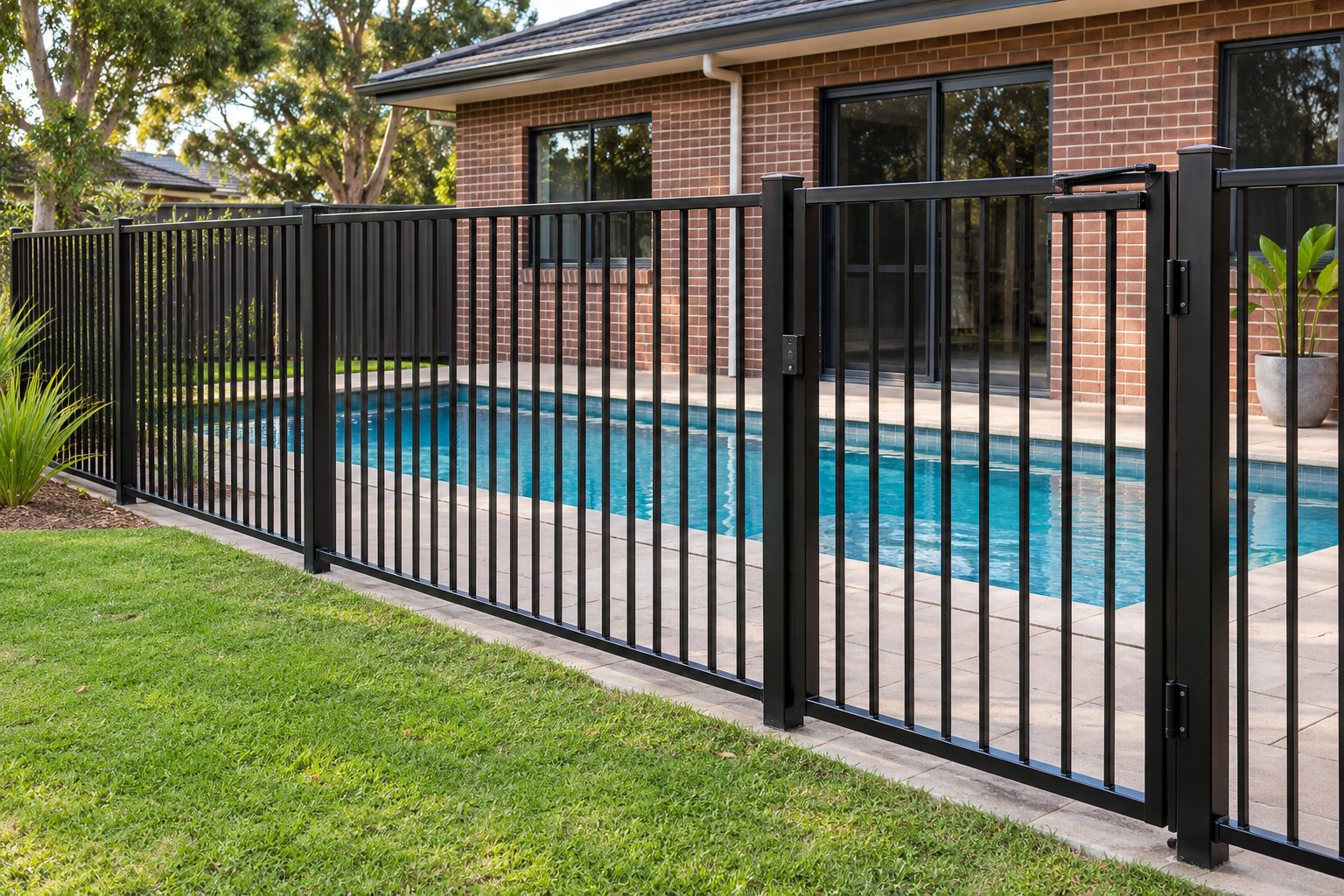
Replacing an old fence on a rental or a home
Sometimes a repair is not enough. The replacement page covers renewing runs or a whole fence, and the aluminium pool fencing page describes one common option. We do not say the fences in these suburbs are old, because no source gives their age, but an older fence raises the edition question for any owner.
The Regulation treats an existing barrier as complying if it complied with the standard that applied at the time and still does. The NSW page says barriers modified during renovations must meet AS1926.1-2012 and previous exemptions end. Every barrier measurement on this site is attributed to a page that works to the edition the council pages cite (AS 1926.1-2012). A 2024 edition has been published, and no NSW page we found says which edition a certifier applies to a new or replaced fence today. Ask the council or your certifier before you change an old fence.
Working with an agent, and what to send
Ask your agent what they need from you; we do not describe agency practice. Have a current certificate of compliance and the pool's Register details to hand. The NSW page requires the tenant to get a copy of the certificate, and another council's page mentions confirming registration, so keep the dates in view.
Licensing depends on the type and value of the work. The regulator pages we found do not say which category covers fitting or repairing a pool fence. Ask the contractor which licence or registration they hold, check it on the NSW licence check, and ask Building Commission NSW if you are unsure; the licensing page explains the gap.
When you send an enquiry, include the suburb, a photo of the fence and gate, whether the property is a house or a flat, and whether the need is a repair, a replacement or a certificate for a lease. We pass it to a local contractor. For the rest of the city, see Central, East, South and North Wagga, or return to the home page.
What this page cannot settle
It cannot say who must arrange or pay for a repair on a rental, what an agent will ask of an owner or how a tenancy affects anything beyond the NSW lease rules quoted here. The census figures describe people and dwellings, not pools or fences. It cannot say which edition of AS 1926.1 a certifier applies to your fence, or which licence or registration a contractor needs. It gives no prices. The council or your certifier decides whether a fence is acceptable, and the contractor is responsible for the work.
Check the current rules before you rely on this
This page describes pool fencing for landlords, agents and owners in Tolland, Mount Austin and Turvey Park, and the NSW rules on certificates for leases. It describes the rules in general terms as they stood in November 2026. Standards, forms, thresholds and fines change.
The authoritative sources are ABS 2021 Census QuickStats, Tolland (suburb), ABS 2021 Census QuickStats, Mount Austin (suburb), ABS 2021 Census QuickStats, Turvey Park (suburb), NSW Government, owning a pool or spa: your obligations (updated 16 March 2026), Swimming Pools Regulation 2018 (NSW), version in force 30 June 2024 and Wagga Wagga City Council, Swimming Pool Safety Policy POL 049 (approved 17 October 2022). Where anything here differs from those sources, they are right and we are not.
We are not pool fencing contractors, certifiers, builders, regulators or lawyers. For what applies to your pool, ask Wagga Wagga City Council or your certifier which rules and which edition of the standard apply, ask the contractor which licence or registration they hold, and ask Building Commission NSW if you are unsure about licensing.
Accurate at the time of writing, November 2026. Always check the source before relying on it.